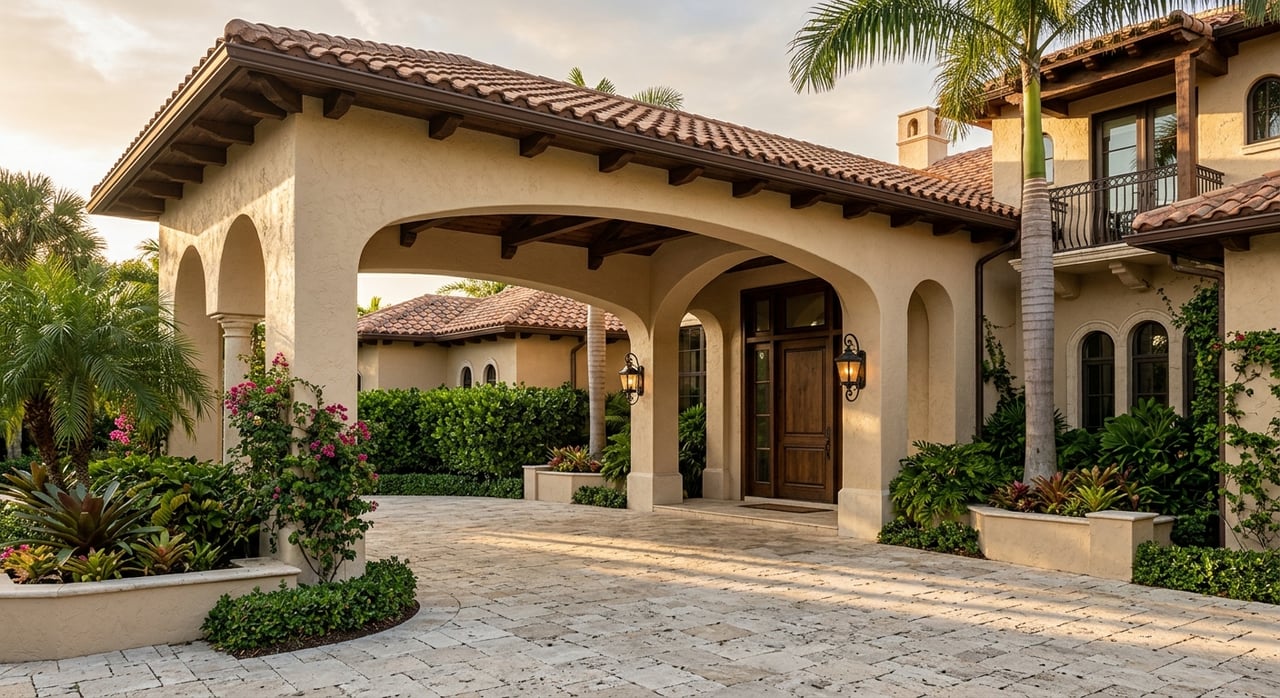
Your Guide to Buying a Second Home in Jupiter
May 7, 2026
May 7, 2026
If you are thinking about buying a second home in Jupiter from out of state, you are probably balancing two very different goals at once. You want the ease and pleasure of a coastal retreat, but you also need clear answers on taxes, flood exposure, beach access, and how ownership works when you are not here full time. The good news is that Jupiter can reward a well-planned purchase. With the right local guidance, you can narrow your options, avoid common assumptions, and buy with more confidence. Let’s dive in.
Jupiter offers a coastal lifestyle that feels active, scenic, and practical for seasonal living. The town has about 61,000 year-round residents, a larger winter seasonal population, roughly 3.4 miles of beaches, a dog-friendly beach segment, and the Jupiter Waterway Trail connecting the Loxahatchee River, Intracoastal Waterway, and Jupiter Inlet.
For many out-of-state buyers, that combination is the draw. You get access to beach days, boating, waterfront views, and an easy Palm Beach County base for longer seasonal stays. At the same time, where you buy matters because beach access, parking, and storm exposure can vary significantly from one property to the next.
One of the biggest mistakes second-home buyers make is treating Jupiter as one uniform market. Recent MLS-based Q4 2025 data show different pricing across local single-family areas, with Jupiter Town at a median sale price of $925,000 and Jupiter Farms at $840,000.
That does not mean one area is simply better than another. It means your search should begin with how you plan to use the home, how often you will be here, and what kind of ownership experience you want.
If your priority is quick access to the beach, walkability, or a water-oriented lifestyle, coastal properties may rise to the top of your list. But in Jupiter, access points are managed by a mix of the Town, Palm Beach County, and private owners.
That is why you should verify beach access and parking at the property level, not just on a map. Two homes with similar locations can offer very different day-to-day convenience depending on the exact crossover, parking setup, and public access nearby.
If you prefer a more structured setting with a mixed-use layout and built-in amenities, Abacoa is the clearest official example in Jupiter. It is a 2,055-acre master-planned community built around traditional neighborhood development principles.
For second-home buyers, this kind of setting can appeal if you want a more predictable layout, an organized community structure, and a straightforward lifestyle when you are in town for shorter stays.
Some Jupiter-branded addresses are not actually within incorporated Jupiter. The town specifically notes that a Jupiter mailing address does not automatically mean the property is inside the town, and it identifies Jupiter Farms and Jonathan’s Landing as unincorporated communities.
This matters more than many out-of-state buyers realize. Jurisdiction can affect taxes, services, and code oversight, so you should confirm the property’s exact governing area before you move forward.
Before you look at finishes, views, or lot lines, it helps to define the property correctly from a tax and ownership standpoint. In Palm Beach County, the homestead exemption applies to a home that is your permanent legal residence.
The county requires ownership as of January 1 and proof of Florida residency such as a Florida driver’s license, voter registration, or vehicle registration, with a March 1 filing deadline for that year’s exemption. For most out-of-state second-home buyers, the safer planning assumption is that the property will be treated as non-homestead unless it later becomes your primary Florida residence.
Palm Beach County assesses property as of January 1 each year. The county also notes that non-homestead properties have assessed values capped at 10% per year, while the school-tax portion is based on market value and is not subject to that cap.
That framework can influence your long-term carrying costs. When you are evaluating a second home, it is wise to model ownership costs using the non-homestead rules rather than assuming primary-residence treatment.
Jupiter is a seasonal market, and timing your visits well can improve your decision-making. The town notes that its seasonal population increases during the winter months, while Atlantic hurricane season runs from June 1 through November 30.
If your schedule allows, try to experience Jupiter in at least two different conditions. A winter visit shows you traffic patterns, seasonal activity, and how the area feels at peak use. A warmer-season visit can give you a clearer sense of storm preparedness, summer conditions, and what off-season ownership may actually feel like.
For an out-of-state buyer, one focused visit can do a lot of heavy lifting. In person, you can test drive times, confirm beach parking, observe the surrounding blocks, and compare how different pockets of Jupiter function day to day.
Jupiter’s public beach information also shows that several free parking lots exist, but access points vary. That is one reason a map review alone is rarely enough for a second-home purchase here.
A second-home purchase in Jupiter often moves more smoothly when your advisory team is in place early. A strong local team typically includes a buyer’s agent, lender, title or settlement professional, inspector, surveyor, and insurance broker.
In this market, that preparation matters because flood exposure, seasonal use, and possible rental plans can affect both cost and risk. Building the team before the offer stage helps you move with more clarity when the right property appears.
Jupiter’s ownership details can be more nuanced than they first appear. A property may have a Jupiter mailing address but fall under a different jurisdiction, and insurance considerations can shift meaningfully based on exact flood-zone conditions.
That is why careful, address-specific review is essential. For second-home buyers who value efficiency and discretion, a well-coordinated local process often saves both time and expensive surprises.
Florida has specific transaction taxes that out-of-state buyers should understand early. According to the Florida Department of Revenue, deeds transferring real property outside Miami-Dade County are subject to documentary stamp tax at 70 cents per $100 of consideration.
The state also taxes promissory notes and other obligations to pay money at 35 cents per $100, and mortgages or liens securing Florida real property are also subject to nonrecurring intangible tax at 2 mills. These costs are not abstract line items. They should be part of your up-front buying analysis before you decide what price range feels comfortable.
For a second home near the coast, insurance and storm-readiness should never be treated as an afterthought. Jupiter’s flood guidance states that the town is vulnerable to flooding from the Loxahatchee River, Jupiter Inlet, the Atlantic Ocean, seasonal rains, hurricanes, canals, lakes, and tidal surge.
The town also says every property has some flood potential. It further notes that FEMA released new flood zone maps effective December 20, 2024, and that most standard homeowners policies do not cover flood damage.
Before finalizing an offer, run the exact property through flood-zone resources and request insurance pricing. That should include a clear review of flood exposure and the likely insurance structure for a home that may sit vacant for part of the year.
This is especially important in a second-home scenario, where vacancy periods and storm timing can affect both your risk profile and your comfort level as an owner.
Some second-home buyers want flexibility to rent the property for part of the year. If that is part of your plan, you need to review state licensing rules and any community or condominium restrictions together.
Florida law defines a vacation rental as certain condominium or cooperative units, or one-to-four-unit dwellings, used as transient public lodging. The state’s licensing guidance says an entire-unit rental becomes licensable when it is rented more than three times in a calendar year for periods of less than 30 days, or when it is advertised as regularly rented that way.
Even if a property appears to fit your rental strategy, the full picture may be more detailed. Licensing thresholds are only one part of the analysis.
If rental use matters to you, make sure community rules, condo documents, and the state framework are reviewed together before you move ahead. That is far better than assuming flexibility after closing.
Owning a second home also means planning for the weeks or months when you are away. Jupiter Utilities advises seasonal residents to provide a forwarding address, consider advance payment for bills, and ask a plumber about shutting off the house valve while away to reduce leak-related flooding risk.
These may seem like small details, but they are part of responsible second-home ownership. Good buying decisions do not stop at closing. They include a plan for how the home will be managed when you are not in residence.
As you narrow your search, keep these priorities in view:
Buying a second home in Jupiter from out of state can be deeply rewarding, but it works best when you approach it as both a lifestyle purchase and a detailed local decision. The right property is not just the one with the best view or the strongest first impression. It is the one that fits how you live, how often you will use it, and what ownership will realistically require.
For buyers who value discretion, careful planning, and a more tailored path into Palm Beach County, local insight makes all the difference. If you are considering a second home in Jupiter and want a refined, hands-on strategy, The Hasozbek-Garcia Team can help you navigate the market with clarity.
Stay up to date on the latest real estate trends.

Bringing together a team with the passion, dedication, and resources to help our clients reach their buying and selling goals. With you every step of the way. Contact The Hasozbek-Garcia Team today for a free consultation for buying, selling, renting or investing in Florida.
Get in Touch With Our Team to Learn More

THE HASOZBEK-GARCIA TEAM
125 WORTH AVE STE 221 PALM BEACH FL 33480