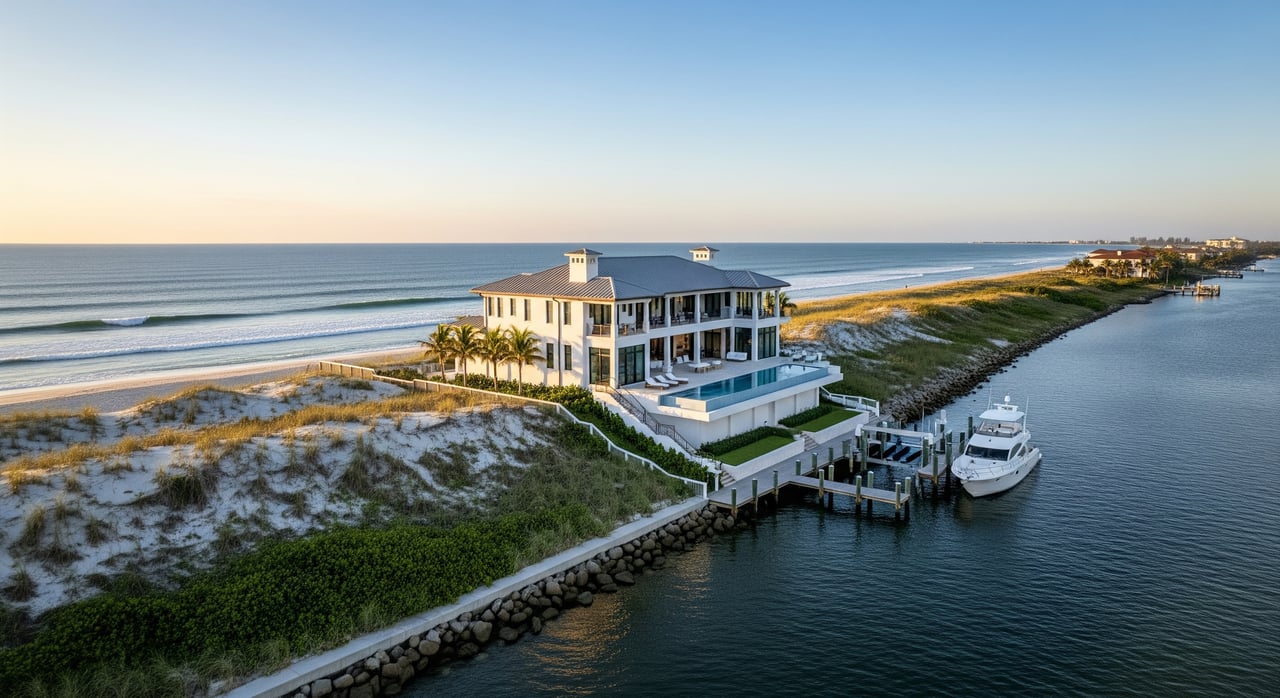
Choosing Between Oceanfront and Intracoastal on Jupiter Island
December 18, 2025
December 18, 2025
Should you plant your flag on the Atlantic or place your dock on calm, protected waters? If you are weighing an oceanfront estate against an Intracoastal compound on Jupiter Island, you are not alone. You want privacy, effortless recreation, and confidence about storms, maintenance, and rules. This guide gives you a clear, practical framework grounded in official coastal guidance so you can choose with conviction. Let’s dive in.
Jupiter Island in Martin County is a narrow barrier island with the Atlantic Ocean to the east and the Intracoastal Waterway to the west. Land is scarce and low density, which supports high-value estates. The ocean side faces open surf and offshore storms, while the Intracoastal side is protected water with lower wave energy, but it still sees boat wakes and tidal surge through Jupiter Inlet.
| Factor | Oceanfront | Intracoastal |
|---|---|---|
| Privacy feel | Panoramic views, no road or canal on the frontage | Varies by lot and docks, more neighbors across water |
| Beach access | Direct private dune paths to sand | No private ocean beach, beach trips require crossing the island |
| Boating | No practical private deepwater dock on ocean side | On-site dock, lifts, and mid-size yacht access, subject to depth and permits |
| Storm exposure | Highest wave and erosion exposure, VE zones common | Lower wave energy, still subject to surge and flooding |
| Maintenance | Salt corrosion, dune and beach repairs after storms | Seawall, dock, lift upkeep and wake-related wear |
| Regulations | CCCL limits and sea turtle lighting rules | Dock/mangrove permitting with state and federal review |
| Insurance | Typically higher wind and flood risk scrutiny | Elevated risk too, often less wave-related exposure |
You enjoy strong privacy for direct beachfront use. Many estates have private dune or boardwalk access, and there are no canals or streets on the ocean face. Expect uninterrupted Atlantic views and dramatic sunrises, along with constant surf sound and salt air.
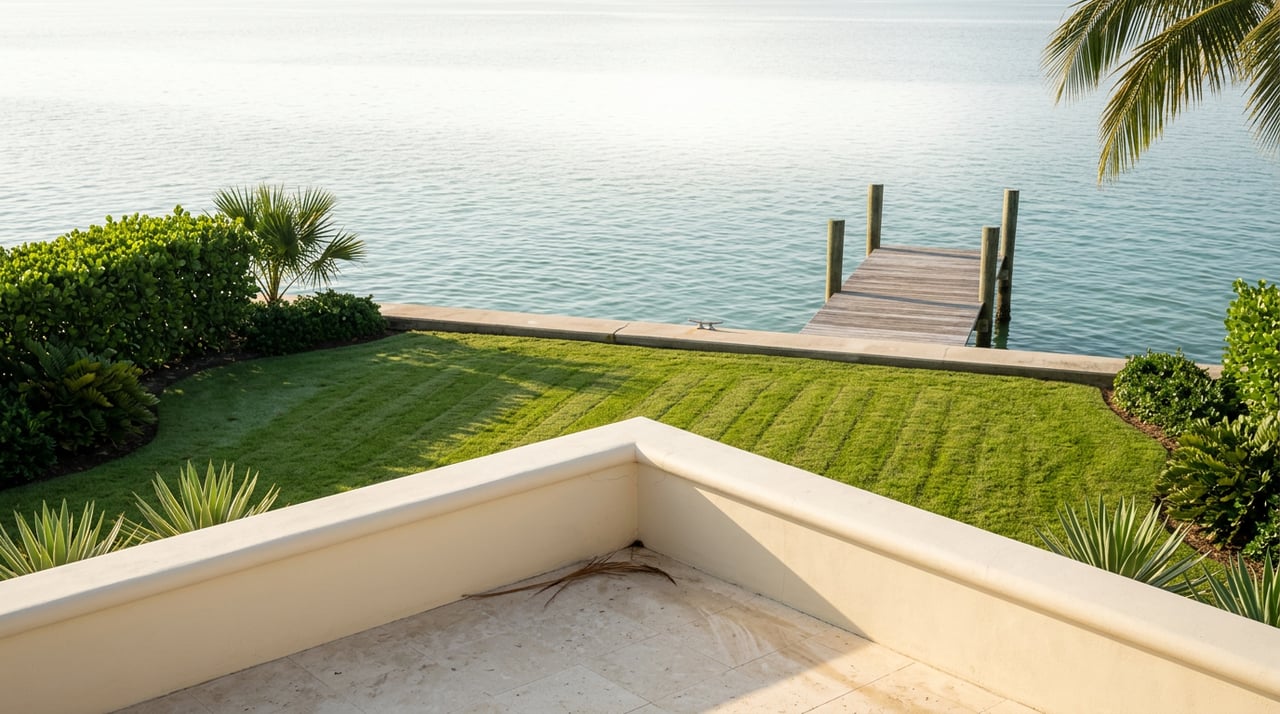
Privacy depends on lot orientation, neighboring docks, and vegetation. Mangroves and landscaping can create effective screening. The soundscape is calmer than surf, aside from passing boats. If you enjoy dockside activity, this setting can feel more domestic and marina oriented.
You step from your boardwalk to the sand for swimming, surfing, and sunrise walks. It is ideal if beachfront entertaining and daily ocean swimming matter most. Beach width can narrow seasonally and after storms, and dune restoration helps maintain access.
Your focus shifts to boating, fishing, paddleboarding, and kayaking in protected waters. For families who prefer calmer water activities, the Intracoastal often feels safer than ocean surf. You can still enjoy the Atlantic, but spontaneous beach time is less convenient unless you have dedicated cross-island access.
You have direct access to the ocean but not a practical private deepwater dock on the ocean side due to surf and littoral processes. Large vessels typically rely on marinas. If boating is central to your routine, you will plan around nearby marinas and the inlet.
This is the on-site docking advantage. Good parcels can host sportfish boats and mid-size yachts, subject to depth and permitting. Jupiter Inlet is the gateway to offshore waters and can shoal after storms. Maintenance dredging supports navigation, but conditions vary, so depth and draft must be verified before you buy.
Oceanfront parcels face the highest wave energy, erosion, and storm surge in hurricanes and tropical storms. Many lots fall within FEMA VE coastal high-hazard zones, which drive structural design and elevation choices.
Intracoastal sites still face storm surge and tidal flooding through the inlet, though daily wave energy is lower than the ocean side. Boat wakes and localized scouring around docks and seawalls can be factors along the shoreline.
Florida’s coastal codes require elevated foundations, flood-resistant construction, and design for wind loads. FEMA elevation requirements and Florida Building Code standards shape everything from floor heights to window systems and mechanical placement.
You should plan for dune care and beach access stabilization, often in coordination with county beach management. Sea-salt corrosion increases maintenance for exterior finishes, HVAC, and metals. After major events, expect dune restoration and coastal repair needs.
Seawalls, docks, lifts, and pilings require routine inspections and periodic replacement. Dock permits typically involve state and federal review, and mangrove trimming is closely regulated. Private dredging is limited, and public dredge schedules influence navigability.
Both sides carry elevated wind and flood insurance costs compared to inland properties. Oceanfront usually sits in higher risk classifications. Lenders and insurers will ask for elevation certificates and coastal mitigations, such as elevated mechanicals and surge-resistant materials.
Oceanfront land is exceedingly scarce, which often commands higher per-linear-foot valuations. That rarity must be balanced against higher exposure, insurance scrutiny, and maintenance needs. Intracoastal estates can deliver superior daily utility for boaters and families, and well-sited properties with strong dockage and privacy also attract deep buyer pools. Your best hedge is to align the parcel with how you will actually live and host, then select design and materials that meet modern coastal standards.
If you wake to surf and step onto sand each day, oceanfront likely fits you. If your perfect day starts at the dock and ends with a sunset cruise, Intracoastal is the natural choice. Both settings reward thoughtful due diligence, resilient design, and targeted permitting strategies.
Ready to tour select oceanfront and Intracoastal estates, on or off market, with seasoned guidance? Connect with The Hasozbek-Garcia Team for a private consultation tailored to your lifestyle and legacy goals.
Stay up to date on the latest real estate trends.
Bringing together a team with the passion, dedication, and resources to help our clients reach their buying and selling goals. With you every step of the way. Contact The Hasozbek-Garcia Team today for a free consultation for buying, selling, renting or investing in Florida.
Get in Touch With Our Team to Learn More
THE HASOZBEK-GARCIA TEAM
125 WORTH AVE STE 221 PALM BEACH FL 33480