Exploring the Palm Beach Historic Estates Lifestyle
June 4, 2026
June 4, 2026
What makes Palm Beach historic estates so enduringly compelling? It is not just their scale or address. It is the way architecture, gardens, coastal access, and civic preservation come together to create a lifestyle that feels both carefully protected and deeply lived in. If you are considering a historic home on the island, understanding that rhythm can help you see beyond the façade and into the day-to-day experience of ownership. Let’s dive in.
Historic estates in Palm Beach exist within a preservation framework that shapes how the island looks and evolves. The Town of Palm Beach adopted its Historic Preservation Ordinance in 1979, and today the Landmarks Preservation Commission reviews landmark designations and proposed changes to landmarked properties. The Town also notes that more than 328 landmark properties, sites, and vistas are protected.
That structure matters when you are evaluating a home. In many luxury markets, a property stands more on its own. In Palm Beach, a historic estate is also part of a larger architectural setting, where exterior changes and visible updates are reviewed through local processes that help preserve the island’s visual continuity.
For non-landmarked properties, ARCOM reviews visible exterior changes and landscaping. This helps explain why so many older streetscapes on the island feel unusually cohesive. The result is a setting that appears intentional, not accidental.
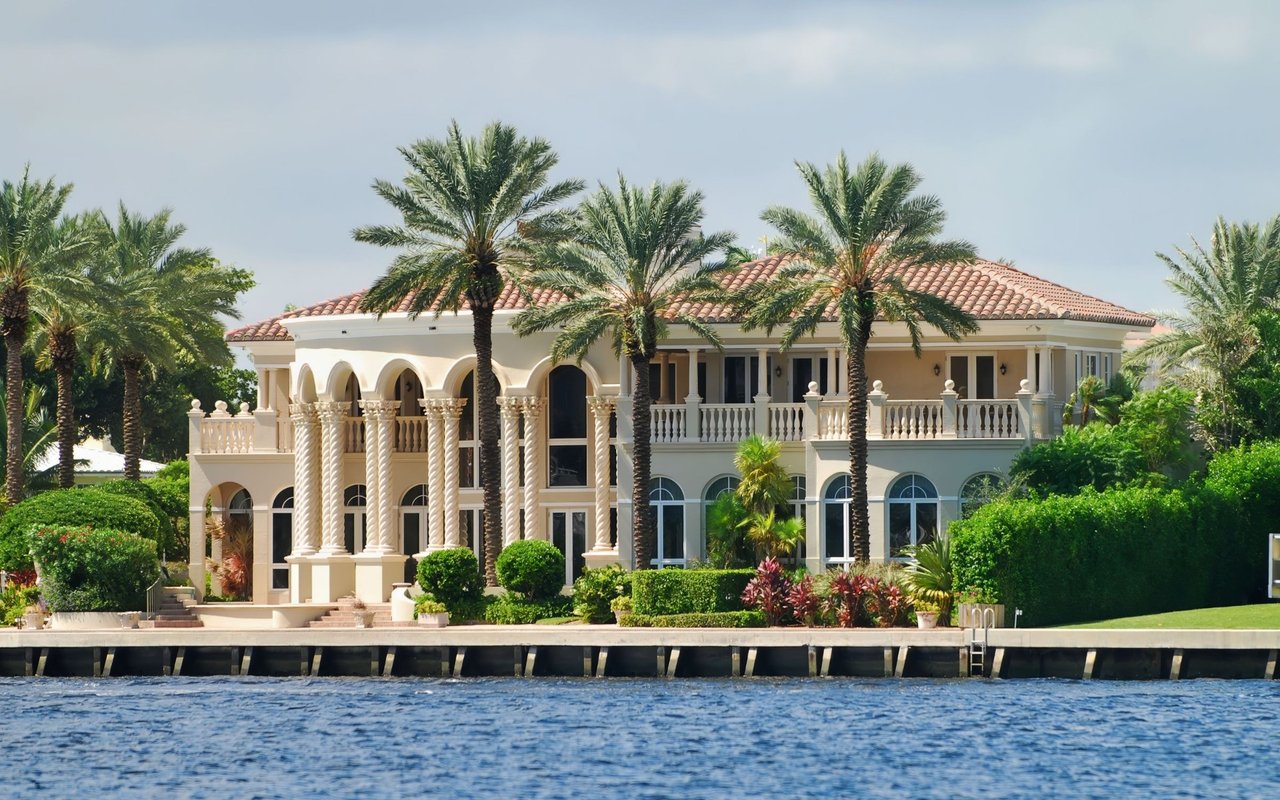
Palm Beach’s historic identity was heavily influenced by the building wave of the 1920s. According to the Preservation Foundation of Palm Beach, Addison Mizner’s 1918 Everglades Club helped shift the island toward Mediterranean Revival architecture, replacing earlier vernacular forms. Later, architect John Volk refined a range of local styles, from Mediterranean Revival to Modern, and helped shape the landmarks program.
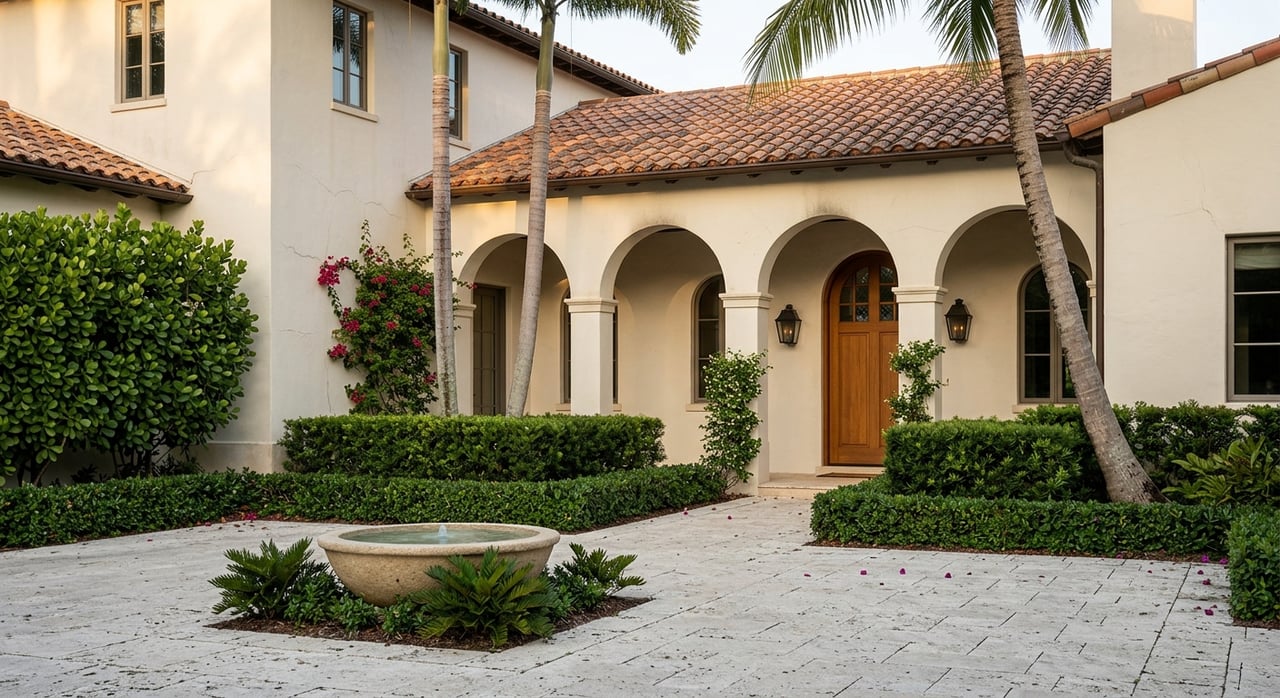
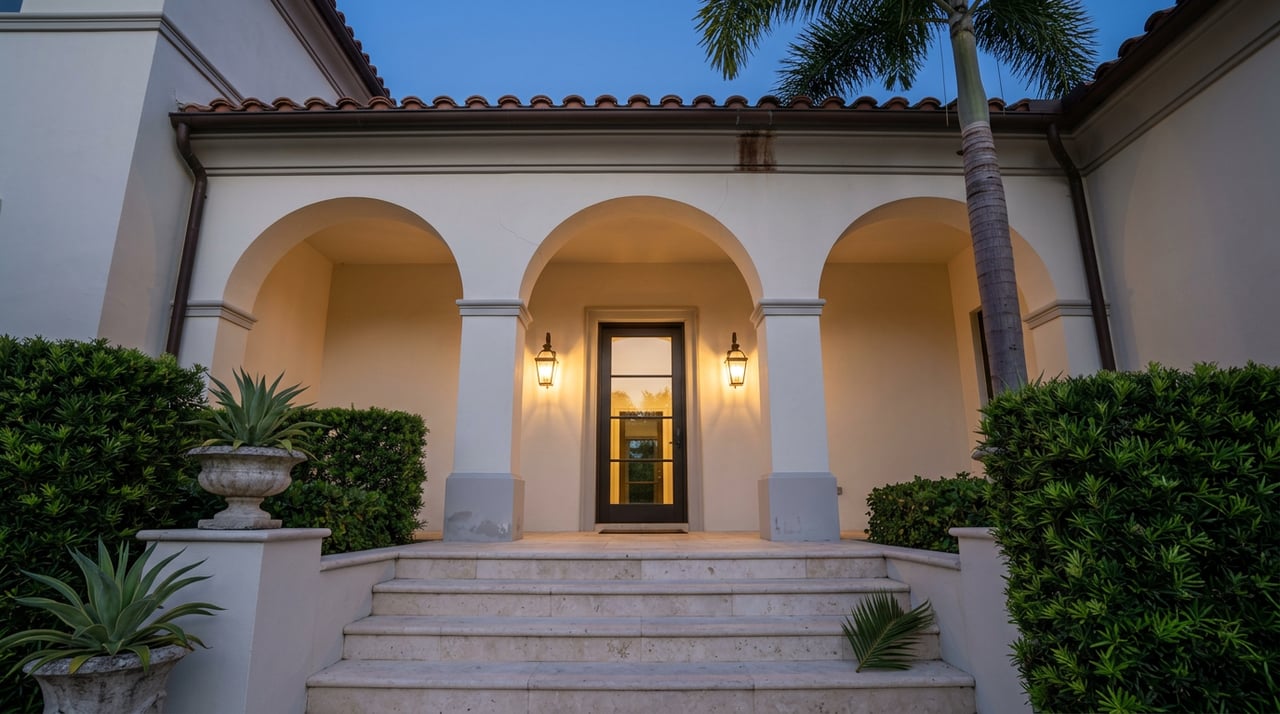
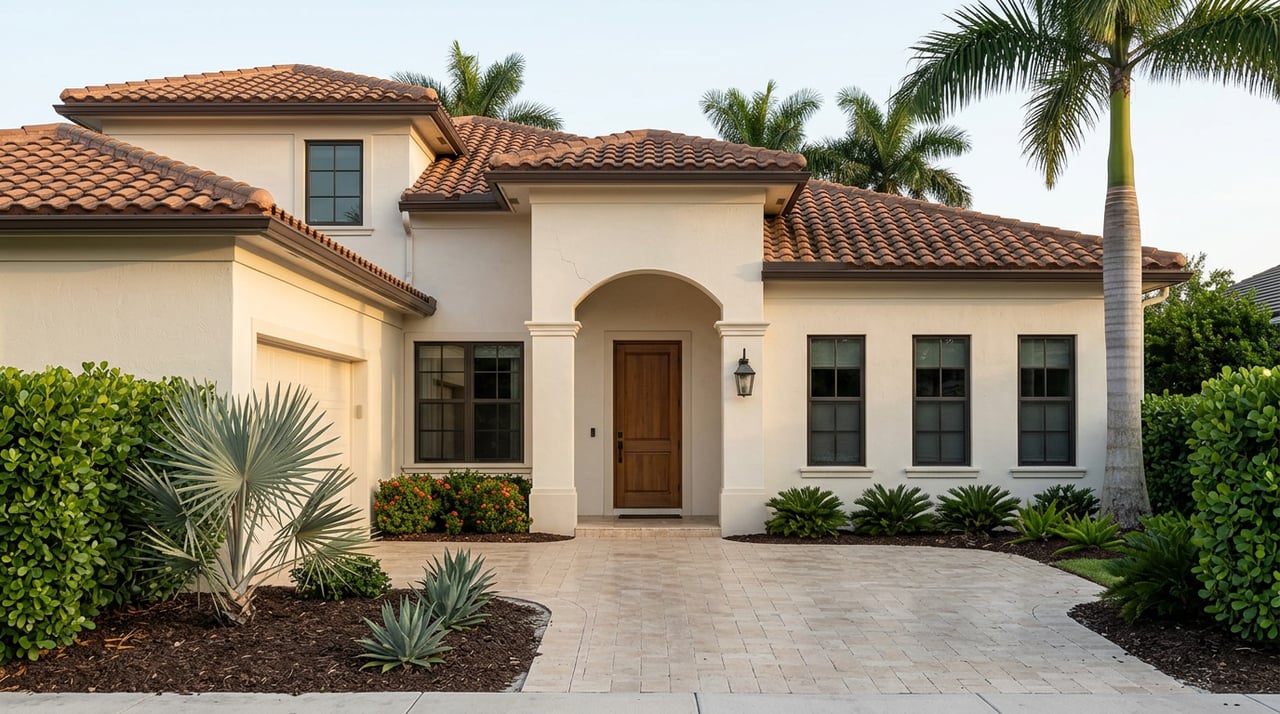
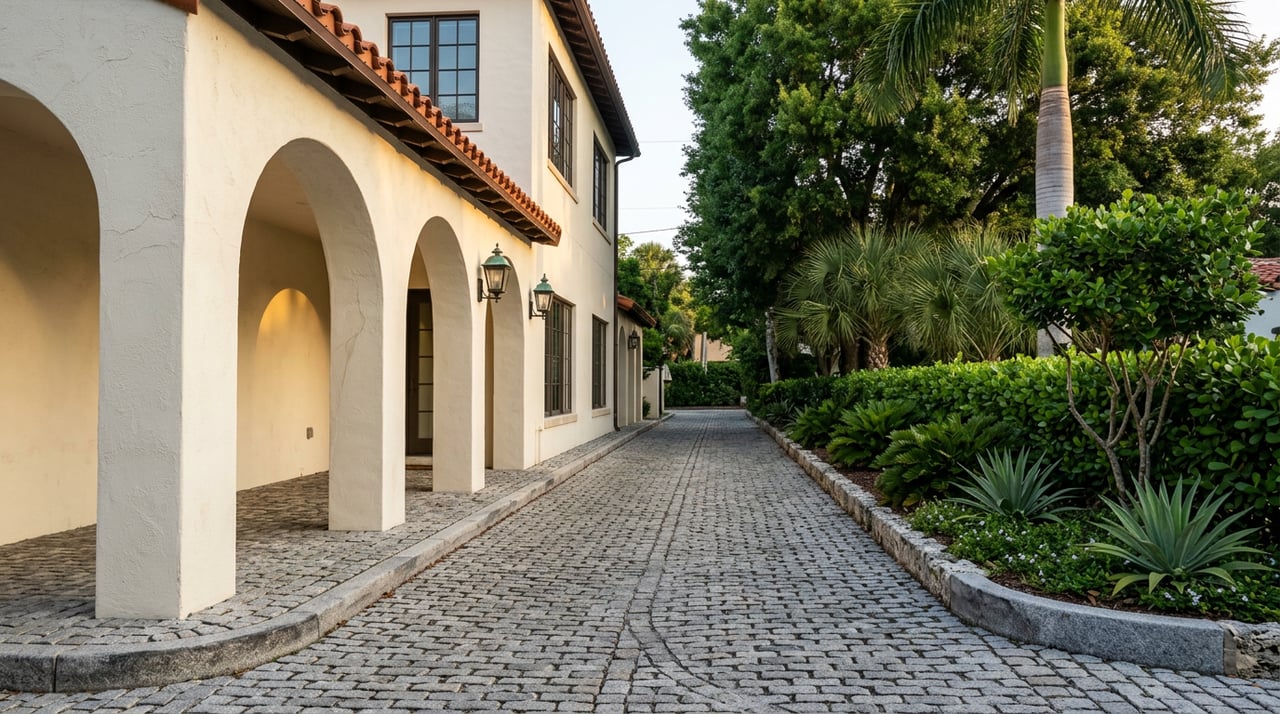
For you as a buyer, that means a historic estate often carries architectural provenance that goes beyond style alone. Arches, courtyards, loggias, and finely composed façades are not simply decorative elements. They are part of a broader Palm Beach design language that continues to influence how homes are maintained and appreciated.
This architectural continuity also affects how the island feels at street level. You are not just buying square footage. You are buying into a place where design standards, historic character, and long-term stewardship are part of daily life.
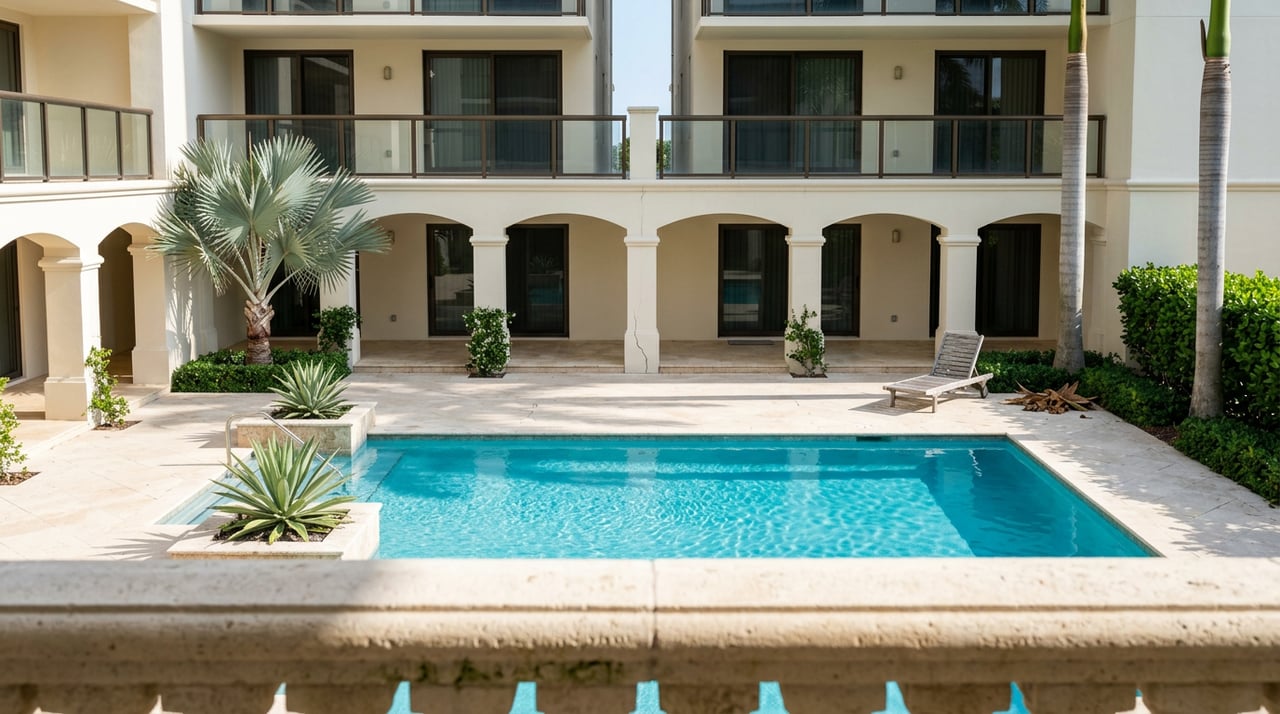
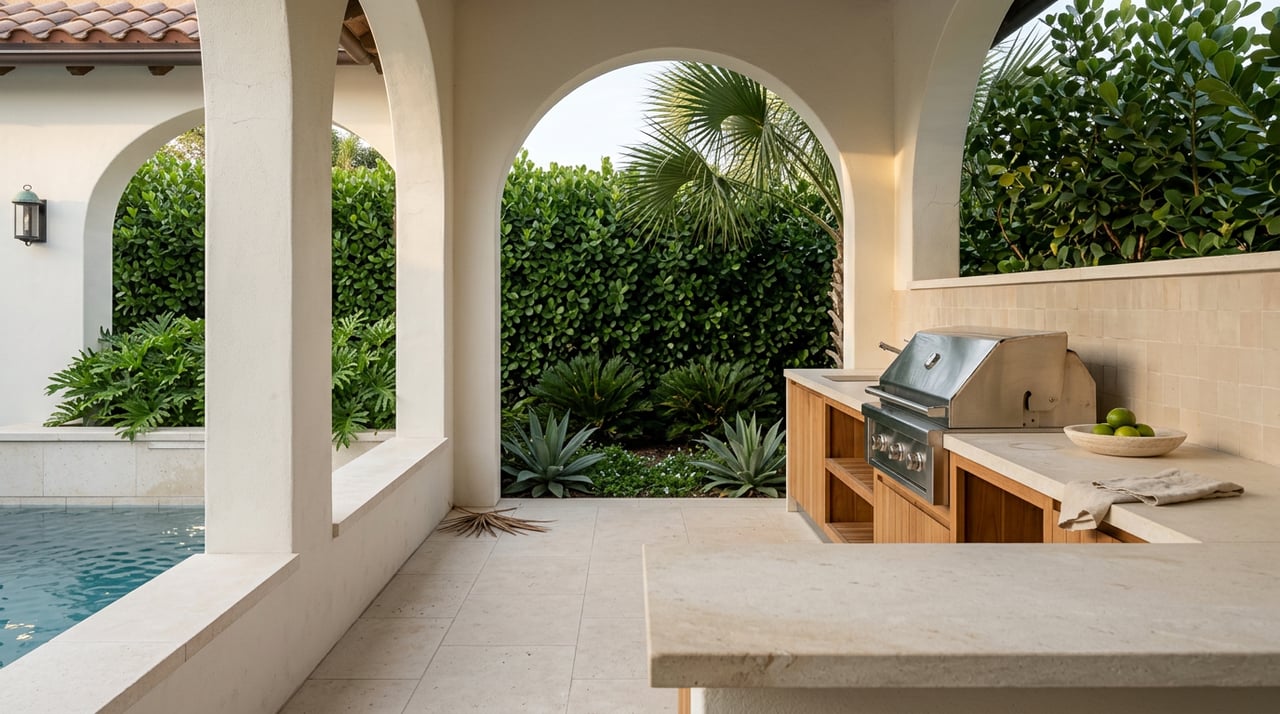
One of the clearest differences between a Palm Beach historic estate and a typical luxury home is the role of outdoor space. The local design language, especially around Worth Avenue, emphasizes arcades, colonnades, vias, courtyards, patios, terraces, balconies, loggias, fountains, and connected outdoor areas. That same garden-forward approach appears across many of the island’s older estates.
In practical terms, this means the lifestyle often centers as much on terraces and garden rooms as on formal interiors. Outdoor spaces are designed as living environments, not just visual backdrops. In a climate that supports year-round enjoyment, that changes how a home is used from morning to evening.
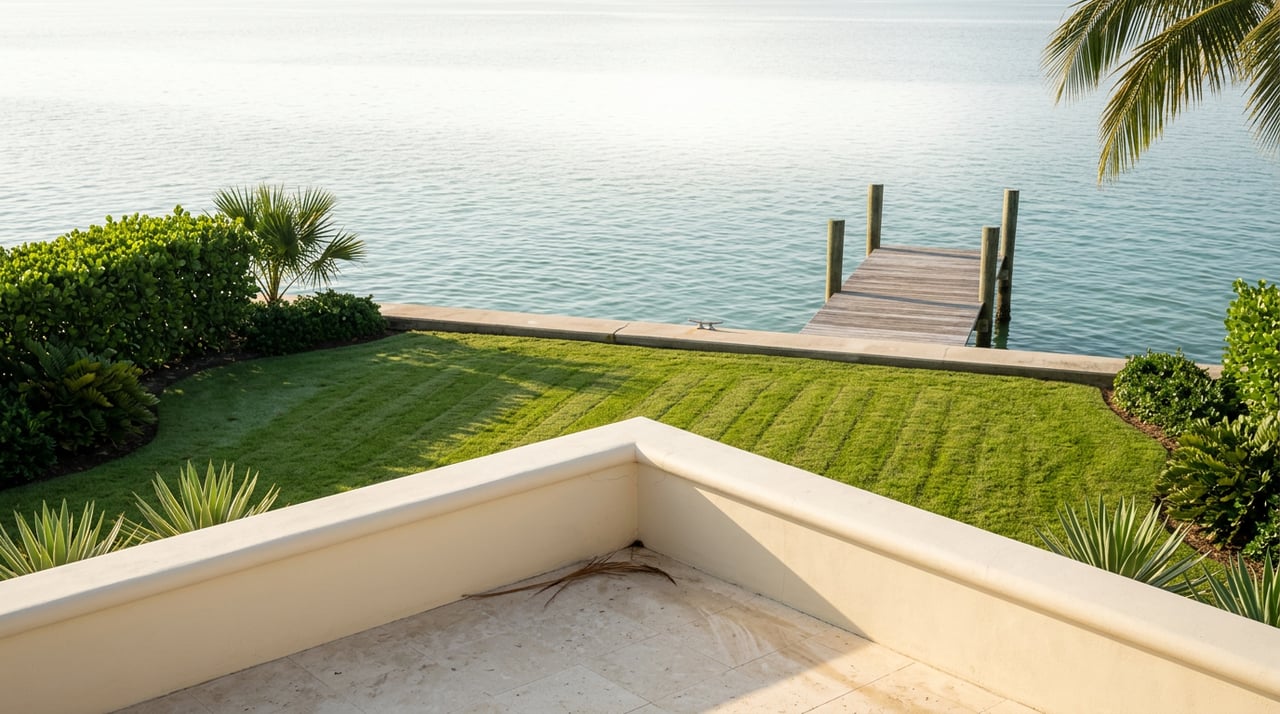
The Preservation Foundation’s landscape history adds another layer. Many 1920s estates were designed to present a cultivated tropical setting, often blending formal layouts with both native and exotic plantings. Palm Beach’s historic homes were envisioned as complete environments, where architecture and landscape worked together.
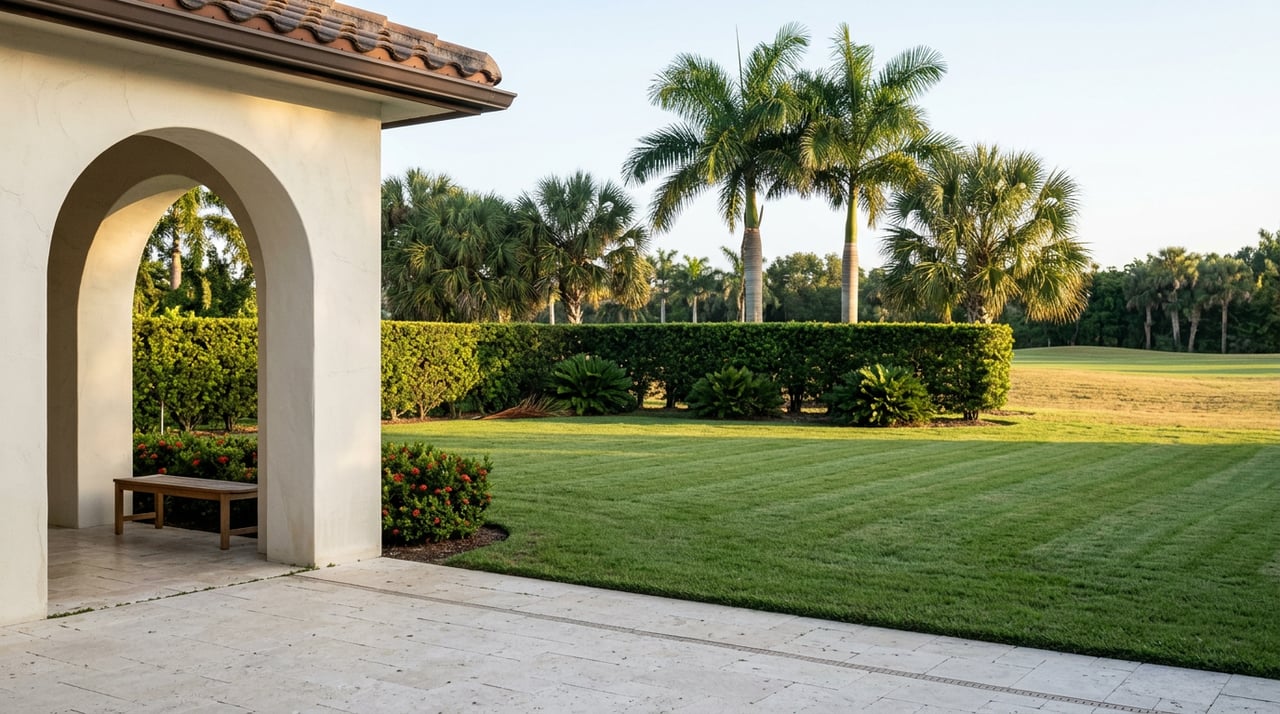
That legacy still shapes expectations today. Mature hedges, sculpted lawns, fountains, shaded patios, and framed garden views are often part of the experience. For buyers who value privacy and beauty, this is one of the island’s defining qualities.
Palm Beach historic living is not only about privacy and architecture. It is also remarkably convenient. The Town identifies Worth Avenue and Royal Poinciana Way as the main areas for dining and shopping, and Worth Avenue is known for its walkable vias, boutiques, and outdoor dining.
That concentration of activity gives the island a distinctive rhythm. You can move from a quiet residential street to a polished retail and dining district within minutes. The experience feels compact and accessible rather than sprawling.
Worth Avenue also reflects the same historic character seen in the estates themselves. Local design guidelines specifically note the architectural importance of Mizner-designed structures and the Everglades Club in shaping the avenue’s identity. In Palm Beach, architecture, commerce, and social life often share the same setting.
Palm Beach offers a lifestyle that balances residential calm with easy movement. Three bridges connect the island to West Palm Beach, making off-island access straightforward while preserving the island’s sense of separation. That combination is part of what makes the area feel secluded without feeling isolated.
On the island, the nearly six-mile Lake Trail is a major daily amenity. Running along the Intracoastal, it supports walking, jogging, and cycling while offering a strong visual connection to the water. For many residents, it becomes part of the everyday routine rather than an occasional outing.
Beach access is equally important. The island has 12 miles of beachfront, and the Town notes that two public beaches receive daily lifeguard coverage. The Town’s coastal planning also treats beaches and dunes as a first line of defense for the island, so shoreline upkeep is closely tied to preserving the character of life here.
Palm Beach is often associated with private-club life, and that is certainly part of the local identity. But the island also has a meaningful public cultural infrastructure that adds depth to daily living. This is especially important if you are looking for a home that offers more than seasonal social routines.
The Society of the Four Arts is a leading example. Its 10-acre Intracoastal campus includes a performance hall, gallery, education center, library, children’s library, and sculpture gardens, with much of its programming concentrated from November through May. That seasonal calendar gives the island a cultural rhythm that aligns with how many residents use their homes.
The King Library further supports that sense of civic life. The Four Arts says it serves as the island’s town library, with more than 75,000 books, audiobooks, DVDs, and periodicals, along with discussions and author talks. The Town also contracts with the Four Arts Library to provide resident library services.
Public garden spaces reinforce this side of Palm Beach living. The Four Arts gardens are open daily and free to the public, and the Philip Hulitar Sculpture Garden combines lawns, fountains, sculpture, and seating. Nearby, Ann Norton Sculpture Gardens preserves a two-acre rare-palm sanctuary and more than 100 works of art in a natural setting.
Across the bridges, the cultural circuit continues. Whitehall, Henry Flagler’s former estate, is open as the Flagler Museum, and the Norton Museum of Art in West Palm Beach adds exhibitions, evening programming, and garden dining. For a resident, this means your lifestyle can feel highly residential without becoming insular.
If you are drawn to a historic estate in Palm Beach, it helps to approach the purchase with the right mindset. These homes offer beauty, privacy, and provenance, but they also sit within a framework of review and preservation. Exterior work, landscaping, and additions may be more closely tied to local design oversight than in a typical luxury market.
That does not diminish the appeal. In many cases, it strengthens it. The same oversight that can shape renovation timelines also helps protect the architectural coherence and long-term character that make the island so desirable.
For many buyers, this is the central trade-off and the central reward. You are not simply acquiring a luxury property. You are becoming a steward of a home that contributes to one of the country’s most carefully maintained coastal environments.
Palm Beach historic estates stand apart because so many lifestyle elements are concentrated in one place. Heritage architecture, mature gardens, walkable shopping and dining, beach access, the Lake Trail, and a strong seasonal cultural calendar all sit close together. That creates a rare blend of ease and refinement.
The lifestyle also feels layered. A morning walk along the Intracoastal can lead to lunch near Worth Avenue, an afternoon in the garden, and an evening lecture or performance at the Four Arts. Even when the pace is quiet, there is structure and richness to the day.
For the right buyer, that is the real appeal. A Palm Beach historic estate offers more than prestige. It offers a way of living shaped by design, preservation, and a deep sense of place.
If you are exploring architecturally significant homes, restored estates, or discreet opportunities on Palm Beach Island, The Hasozbek-Garcia Team offers boutique guidance grounded in local architectural knowledge and private client service.
Stay up to date on the latest real estate trends.
Bringing together a team with the passion, dedication, and resources to help our clients reach their buying and selling goals. With you every step of the way. Contact The Hasozbek-Garcia Team today for a free consultation for buying, selling, renting or investing in Florida.
Get in Touch With Our Team to Learn More
THE HASOZBEK-GARCIA TEAM
125 WORTH AVE STE 221 PALM BEACH FL 33480