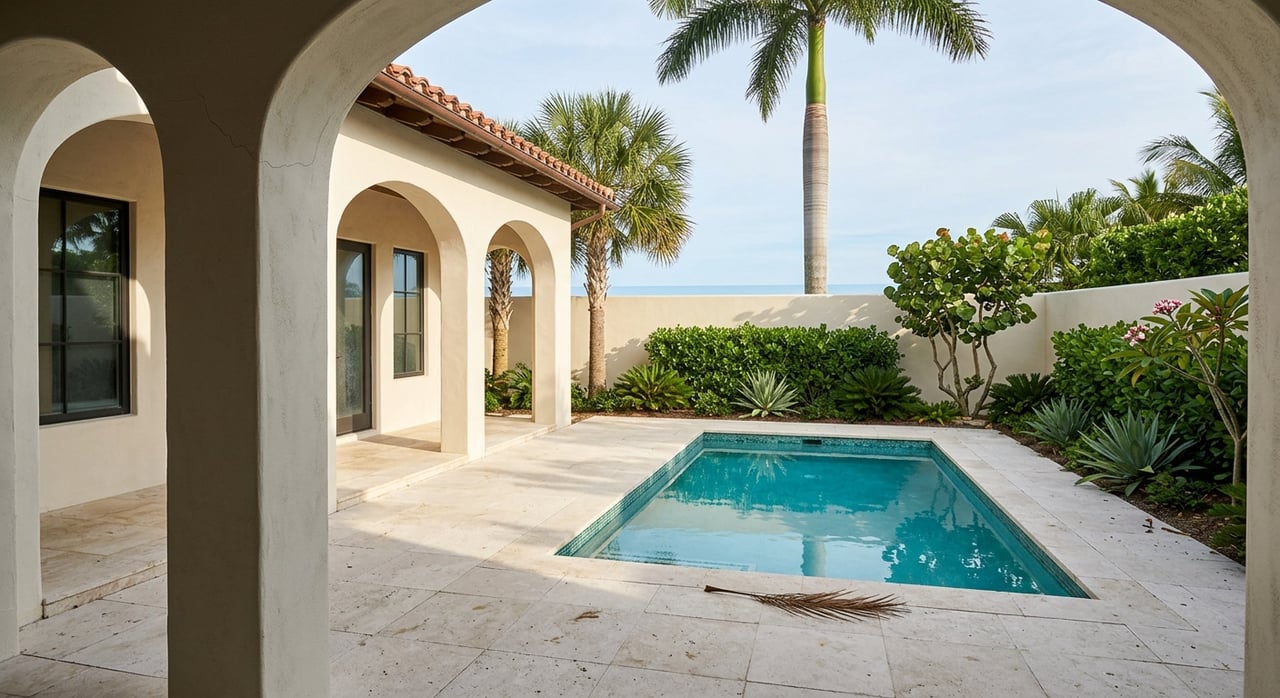
How to List a Jupiter Island Luxury Home Strategically
May 28, 2026
May 28, 2026
If you are planning to sell a luxury home on Jupiter Island, a standard listing playbook is rarely enough. This is a small, estate-oriented market where inventory is limited, privacy matters, and each property can shape how buyers read the market as a whole. With the right strategy, you can protect discretion, present your home with precision, and launch in a way that supports both visibility and value. Let’s dive in.
Jupiter Island is not a broad, high-volume market. The town describes itself as low-density and estate-oriented, with about 1,643 acres, nine miles of ocean frontage, roughly 820 permanent residents, nearly 2,000 seasonal residents, and 705 taxable parcels.
That small scale matters when you list. Current market snapshots show just 32 properties for sale, with a median listing price of $18.88 million, a median price per square foot of $3.1K, and a median 91 days on market. In a market this thin, your pricing, timing, and exposure strategy should be tailored to your property rather than based on broad county averages.
On Jupiter Island, two homes can sit in the same town and still require very different listing strategies. Lot position, water frontage, privacy, recent improvements, flood considerations, and redevelopment potential can all influence how your home should be introduced to the market.
A strategic listing plan usually begins with a few key decisions:
For luxury sellers, the goal is not just to list. The goal is to launch with clarity and control.
Jupiter Island follows a seasonal rhythm that can affect buyer activity. South Florida luxury demand often strengthens in winter, when second-home and out-of-town buyers are more active in the region.
That pattern aligns with Jupiter Island’s own seasonal population changes. The town reports that its population rises to nearly 2,000 seasonally, which means winter and early spring may offer stronger in-person buyer traffic for a well-positioned luxury listing.
Fall and early winter can be especially useful for pre-listing work. The town’s building schedule includes longer construction hours from May 1 through October 31 and shorter winter hours from November 1 through April 30.
That makes the earlier part of the seasonal cycle a practical time to complete repairs, refine landscaping, schedule photography, and finalize presentation details before buyers are most active. A polished launch often depends on the work done before the home ever appears publicly.
A national benchmark may suggest mid-April as a strong time to sell, but Jupiter Island is not a one-size-fits-all market. If your priority is broad exposure, that type of benchmark may be useful.
If your priority is to meet seasonal luxury buyers while they are already in South Florida, a winter or early spring launch may make more sense. The best answer depends on your home, your privacy preferences, and the audience you want to reach.
Because Jupiter Island is defined by secluded single-family estates and conservation land, a privacy-first approach is often the better fit. In practice, that usually means appointment-only access, qualified buyers, controlled showing windows, and careful handling of photography or media permissions.
This approach helps protect your time and your privacy while keeping the presentation focused. It also creates a more intentional experience for serious buyers who are accustomed to a discreet luxury process.
Open-house-style exposure is not always the right choice for a market built around seclusion. Many sellers are better served by a showing plan that prioritizes buyer qualification and coordinated access.
That can help reduce unnecessary foot traffic, limit disruption, and keep the rollout aligned with the tone of the property. For a high-value estate, how buyers experience the home can be just as important as how many people see it.
Before your home goes live, it is smart to confirm property details through Martin County’s property information lookup. Key items include flood zone, land use and zoning, building wind speed, utilities, school zones, and solid-waste information.
This step supports accurate marketing and reduces the risk of overstating features or future possibilities. It also gives buyers greater confidence when questions arise during showings or negotiations.
For waterfront or near-shore homes, coastal conditions deserve special attention. Jupiter Island maintains a Beach Protection District focused on erosion and storm damage, and the town’s flood guidance highlights dunes, flood hazards, and coastal management rules.
If you plan to reference exterior improvements, shoreline work, protective features, or site condition in marketing, those details should be documented carefully before launch. Accuracy is especially important when the property’s value is tied to its coastal setting.
If your home may appeal to buyers who want to expand, redevelop, or reconfigure the property, confirm the parcel’s zoning district before making any forward-looking claims. Jupiter Island’s code includes multiple estate and island-core districts, including A-80, B-40, C-35, D-25, E-12, F-15, and G-35, along with conservation and public land districts.
Some districts include specific floor-area formulas. That means future potential should be positioned carefully and only after the zoning framework is verified.
Luxury preparation often comes down to details. On Jupiter Island, one practical example is the town rule effective November 1, 2025, that prohibits gas-powered leaf blowers on residential and public-lands parcels.
That may seem minor, but it can affect how landscaping teams manage final presentation before photography or showings. In a market where appearance and calm setting matter, details like this should be part of the listing prep checklist.
One of the most important decisions is how visible your listing should be at each stage. Luxury sellers often assume the choice is either fully private or fully public, but Jupiter Island usually rewards a more measured approach.
A phased strategy can give you flexibility. You can begin discreetly, test market response, and expand exposure only when the home is fully prepared and the timing is right.
Under current policy options, an office-exclusive exempt listing can stay out of public marketing and does not have to be disseminated through the MLS. This structure can suit sellers who want a highly private start and prefer broker-to-broker outreach within trusted networks.
For certain properties, this can be an effective way to explore demand without broad public visibility. It is often most valuable when discretion is a top priority.
A delayed-marketing exempt listing can allow public marketing to be held back from IDX and syndication for a period permitted by the local MLS. This can create a middle ground between full privacy and full distribution.
For sellers who want to test pricing or limit early visibility, this can be a useful bridge. It may also create space to refine the launch while still moving toward a broader campaign.
MLS exposure can provide broad market reach and access to current property information within the cooperative system. Syndication then extends that marketing through a broker’s distribution agreements on non-MLS websites.
If your goal is the widest buyer pool, full exposure may be the right final stage. For many Jupiter Island homes, however, that stage works best after the photography, pricing, property details, and showing plan are fully aligned.
If a property is marketed publicly before MLS submission, the Clear Cooperation framework can trigger a one-business-day filing requirement. That makes planning essential if you want a discreet pre-market phase before a broader public launch.
In other words, the order of operations matters. Your photography, broker outreach, public-facing promotion, and MLS timing should be coordinated carefully so the listing strategy stays both effective and compliant.
In a high-value sale, pricing should not focus only on the headline number. Florida documentary stamp tax applies to deeds transferring real property and to recorded mortgages, and the tax is paid when the document is recorded.
That is why strategic pricing should connect to a realistic estimate of net proceeds. A well-designed listing plan looks beyond asking price and keeps your financial outcome in view from the start.
The most effective listing plans on Jupiter Island are usually discreet, highly prepared, and phased. They reflect the island’s low inventory, estate character, seasonal demand, and coastal regulations.
In practical terms, that often means:
That kind of strategy is especially important in a micro-market where each listing carries weight. When the launch is handled with care, your home enters the market with stronger positioning and fewer avoidable surprises.
If you are considering a sale on Jupiter Island, a tailored plan can help you balance privacy, timing, and reach with the level of precision a luxury coastal property deserves. For discreet guidance and a customized listing strategy, connect with The Hasozbek-Garcia Team.
Stay up to date on the latest real estate trends.




Bringing together a team with the passion, dedication, and resources to help our clients reach their buying and selling goals. With you every step of the way. Contact The Hasozbek-Garcia Team today for a free consultation for buying, selling, renting or investing in Florida.
Get in Touch With Our Team to Learn More

THE HASOZBEK-GARCIA TEAM
125 WORTH AVE STE 221 PALM BEACH FL 33480